The Journey of Reading with Phonics at Curiouscent
At Curiouscent, we believe reading is not just about recognizing letters on a page, but about building a joyful, meaningful, and structured journey into literacy. Our approach integrates phonics with engaging activities that connect listening, speaking, reading, and writing. By carefully guiding learners through each stage, we ensure that children not only learn to read but also grow in confidence and creativity. Here’s how the journey unfolds:
Step 1: Phonemic Awareness – Learning to Listen
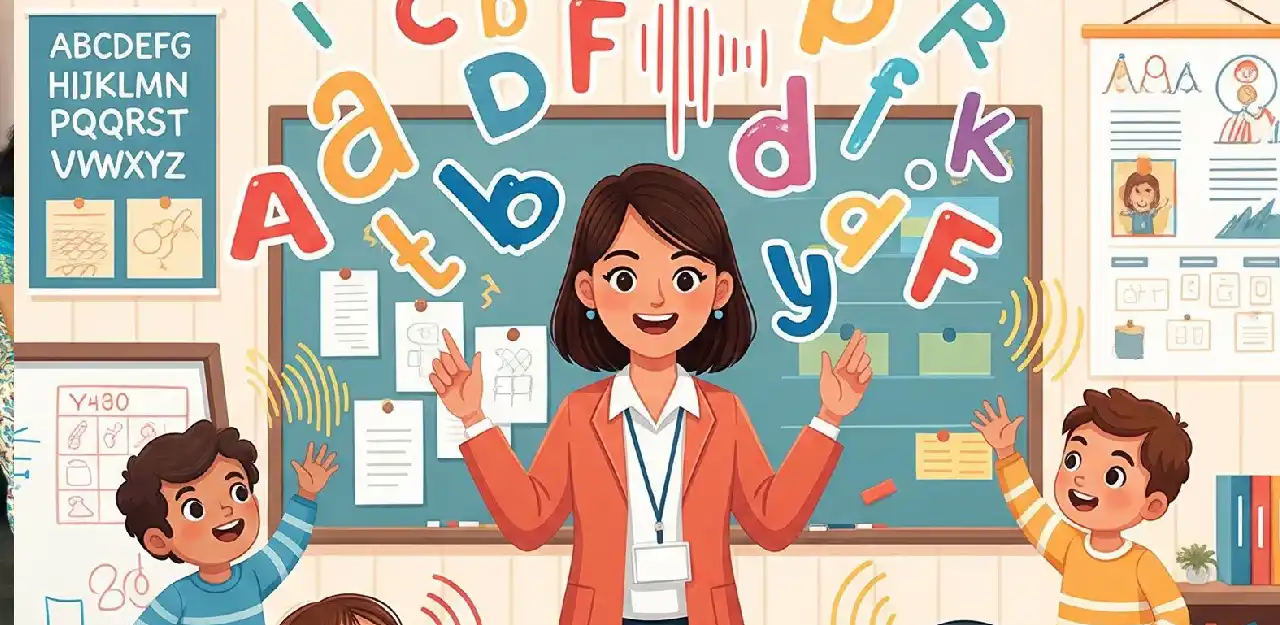
The first step in literacy begins with listening. Children learn to hear, recognize, and play with sounds
through rhymes, clapping syllables, and sound games. This foundation sharpens their ears to detect
differences in speech, preparing them for phonics instruction. Phonemic awareness is like tuning the
instrument before playing the music.
Example activity: Play “I Spy with My Little Ear,” where children identify objects starting with a given
sound (e.g., “I spy something beginning with /s/”).
Step 2: Phonics – Connecting Sounds to Symbols
Once children can hear the sounds, they begin linking these sounds (phonemes) to letters (graphemes).
Using the Jolly Phonics 44 sounds, we make learning fun with actions, tongue twisters, and playful
activities. Here, children discover that letters are not abstract symbols but powerful tools to unlock
words.
Example tongue twister for /s/: “Six slim snakes slide silently.”
Step 3: Blending – Building Words to Read
Blending is where sounds come alive as words. Learners are taught to push sounds together to form
meaningful words. We explore different types of blending – continuous, cumulative, and final – through
activities like “robot talk,” sound button games, and blending races. This makes reading both interactive
and exciting.
Example: Blend /c/ /a/ /t/ to form “cat” or /s/ /t/ /o/ /p/ to form “stop.”
Step 4: Isolation, Deletion, and Addition – Playing with Sounds
Phonics is more than just combining sounds; it’s also about exploring them. At this stage, children identify beginning, middle, and end sounds, and experiment by deleting or adding sounds to create new words.
Examples:
- - Isolation: What is the first sound in “dog”? → /d/
- - Deletion: Say “stop” without /s/ → “top”
- - Addition: Add /s/ to “park” → “spark”
Play-based activities like “magic eraser words” and sound swaps encourage curiosity and deepen their phonological skills.
Step 5: Segmentation – From Listening to Writing
Segmentation turns reading into writing. Learners break words into individual sounds for spelling. For example, the word frog becomes f-r-o-g. Tools like Elkonin boxes and sound tapping exercises make this process visual and tactile, helping children connect spoken language with written forms.
Step 6: Spelling Rules – Applying Knowledge
To strengthen literacy, children learn essential spelling rules. These include: - The Magic e rule (cap →
cape) - Double consonants (hoping vs. hopping) - Digraphs and trigraphs (ch, sh, igh) - Tricky words
(said, was, the)
Story of the Trigraph igh
Once upon a time, the letters i, g, and h were friends. They loved to go on adventures together.
Whenever gh saw their friend i, they would all shout “iiiiiiiii!” together. That’s how they made the long /i/
sound in words like high, sight, and light. Children loved their sound so much that they remembered it
every time they read those words.
This simple story makes abstract concepts like trigraphs easier and more fun for learners to recall.
Step 7: Inclusive Learning – Supporting Every Learner
At Curiouscent, we ensure that all types of learners thrive: - Visual learners engage with flashcards and
colors. - Auditory learners benefit from songs, chants, and rhymes. - Kinesthetic learners connect
through actions, role play, and tactile materials.
Our inclusive strategies also support children with reading challenges, making literacy accessible to all.
The Outcome: Confident Readers and Writers
By following this journey, children develop not only strong reading and writing skills but also resilience, curiosity, and joy in learning. For us, the goal is clear: to nurture the Head with critical thinking, the Heart with confidence and joy, and the Hands with practical skills that empower children for life.
“Teaching children to read is not just unlocking words, it is unlocking worlds.”
Handout Notes
You can view or download the full handout notes for this article below:
📄 Rao school handout 2025 phonetics 📄 Publish Fun with phonincs 📄 Flash card 📄 Phonological & Phonemic Awareness Guide